
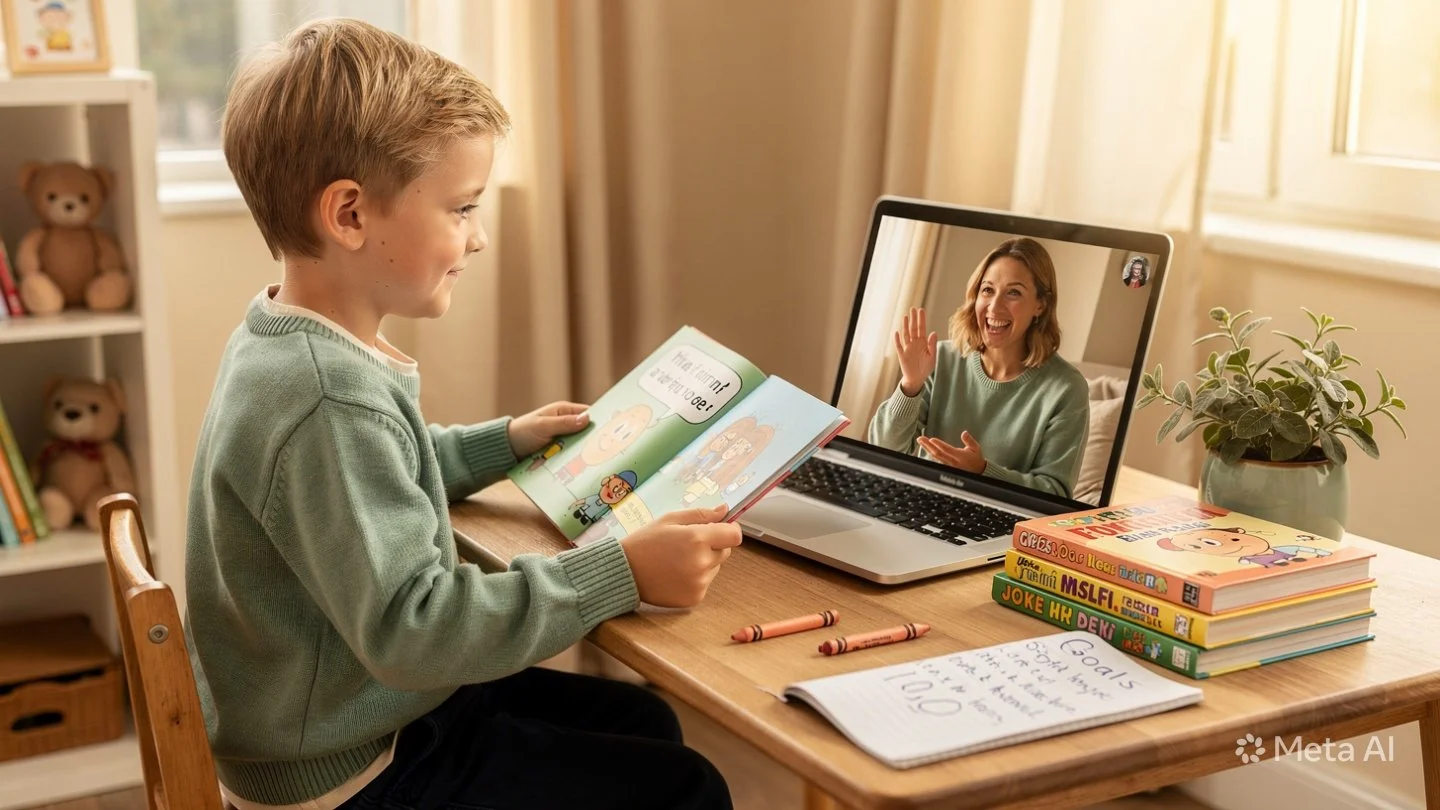
Social Communication Therapy —Connection, conversation, confidence.
Helping children build the social skills that turn everyday moments — playing, talking, and sharing — into meaningful connections with the people around them.

What this service helps withCommon challenges we support.
• Difficulty starting or maintaining conversations
• Trouble understanding social cues or emotions
• Challenges with flexible thinking or perspective‑taking

How Therapy WorksWarm, simple, telehealth-ready.
• Interactive telehealth sessions using role‑play and visuals
• Focus on social understanding and emotional awareness
• Collaboration with parents for real‑world practice
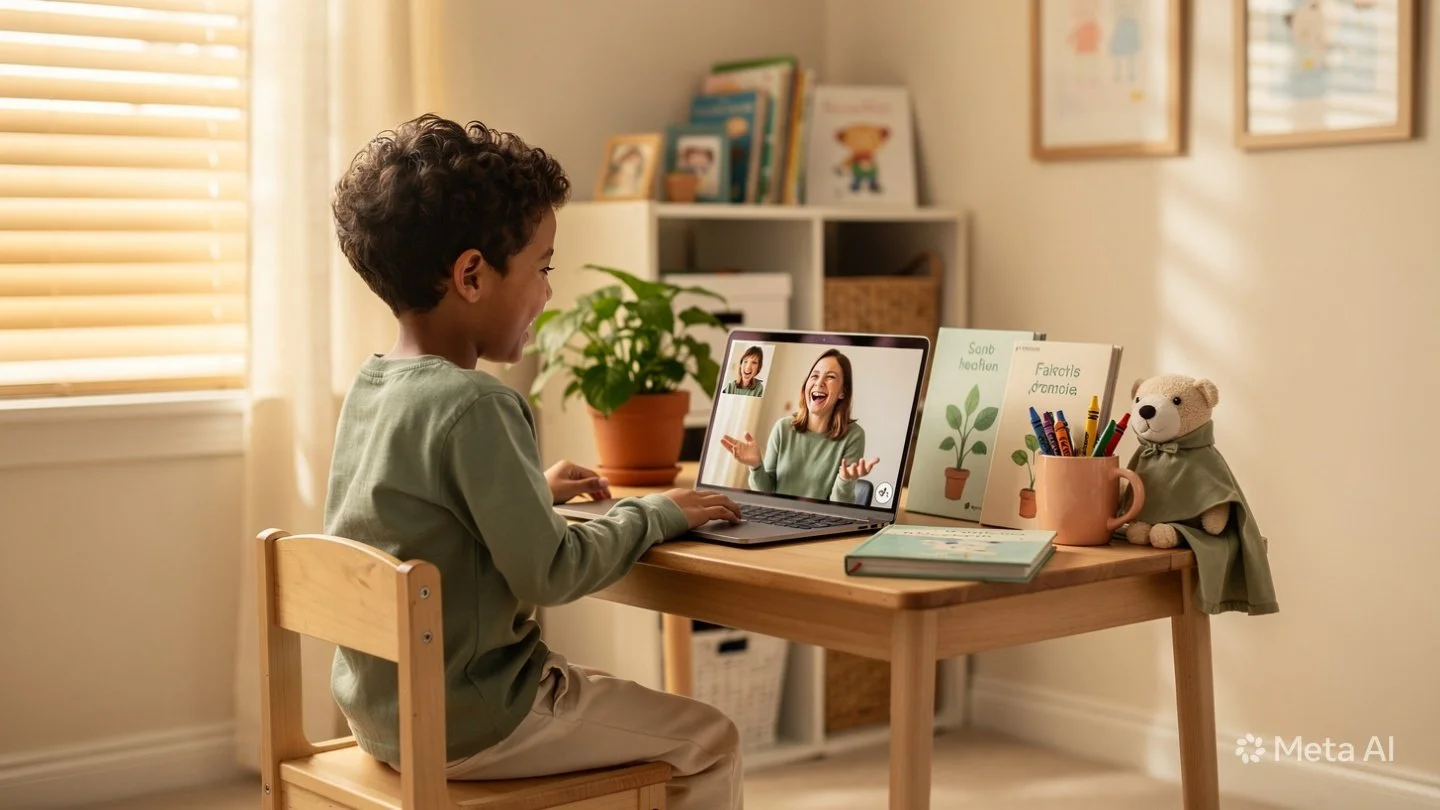
What to Expect in SessionsSessions that feel like a safe conversation.
• Engaging, scenario‑based activities
• Coaching for turn‑taking, empathy, and conversation skills
• Positive reinforcement and progress tracking

Benefits of This ServiceReal progress your family will see.
• Improved social confidence
• Stronger peer relationships
• Better emotional understanding
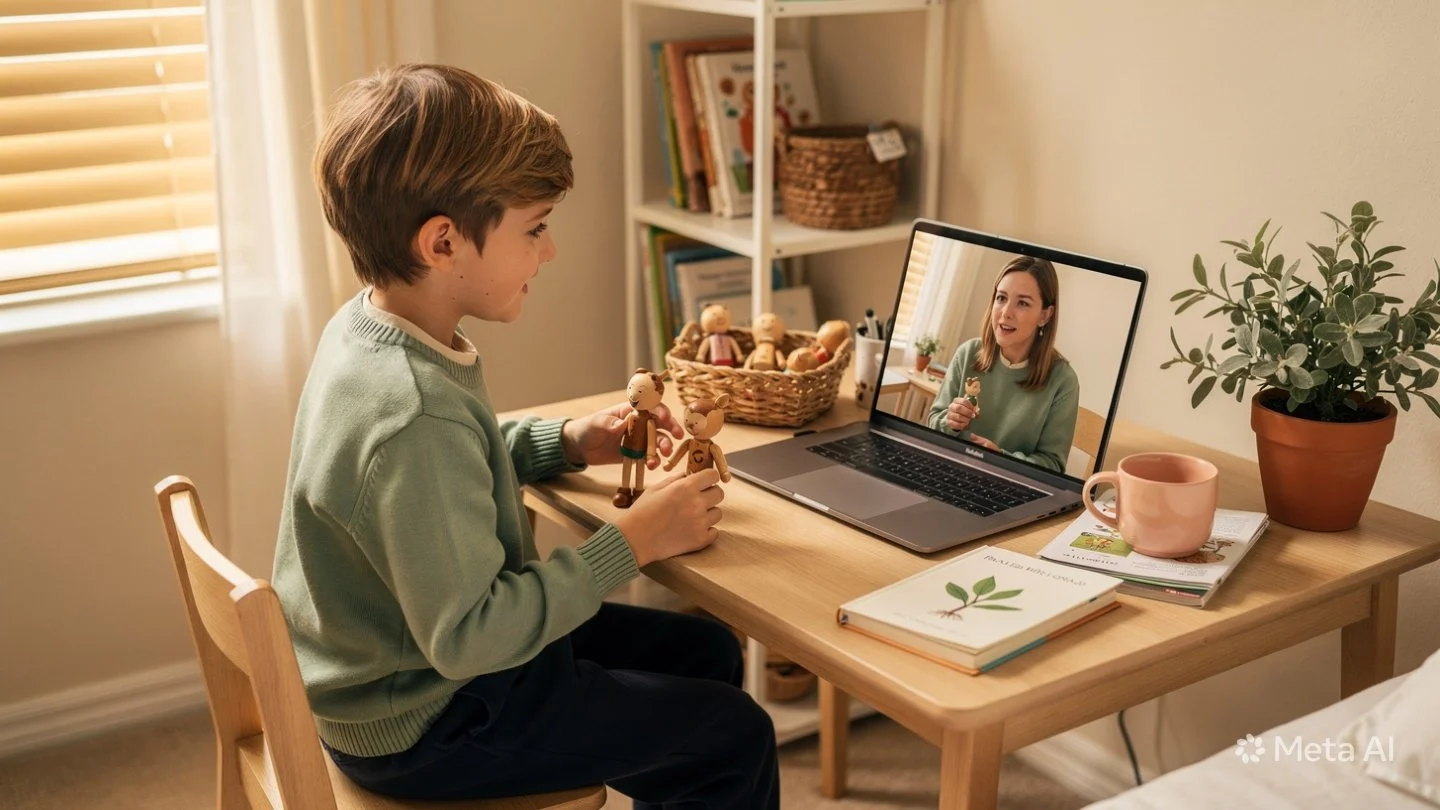
Who This Service Is ForYou’re in the right place if…
• Children with social communication challenges or autism
• Families wanting to strengthen social and emotional skills
Let's help your child feel understood.
Take the first step — a friendly conversation, no commitment, no pressure.